
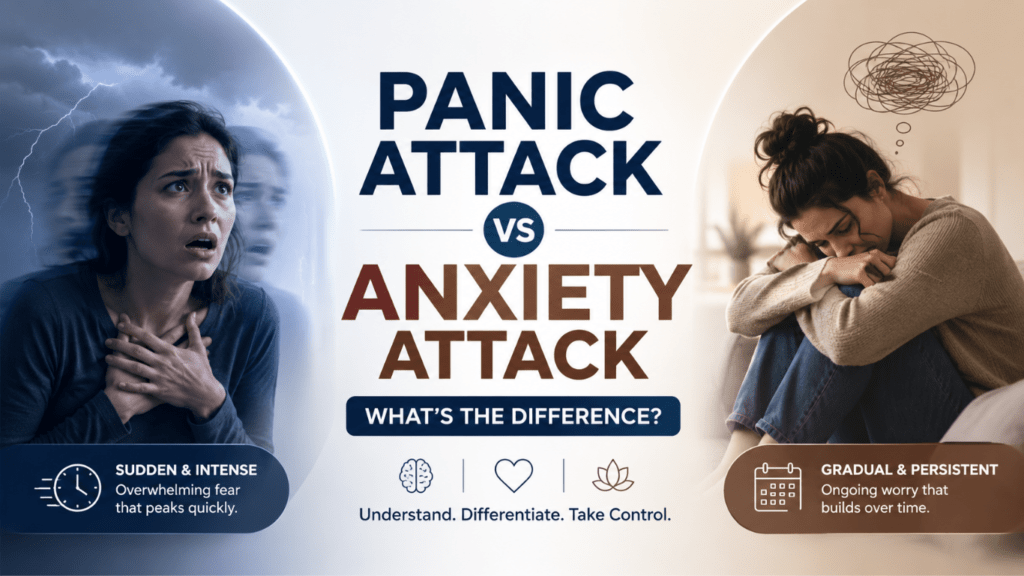
A panic attack comes suddenly — like a wave crashing without warning. An anxiety attack builds slowly, like a storm you can see coming. Both feel terrifying, but they are not the same — and knowing the difference is the first step toward getting the right help.
As a psychiatrist in Chandigarh, I see patients almost every week who confuse the two. This blog will help you understand what separates a panic attack from an anxiety attack, what the symptoms look like, and when it is time to consult a professional.
What Is a Panic Attack? Understanding the Sudden Storm
A panic attack is an intense surge of fear that reaches its peak within minutes. It feels completely overwhelming — many people describe it as feeling like they are dying or losing control.
The key word here is sudden. A panic attack can happen even when you are relaxed, watching TV, or sleeping. There is no obvious trigger.
Common Symptoms of a Panic Attack:
- Racing or pounding heart (palpitations)
- Chest pain or tightness
- Shortness of breath
- Dizziness or feeling faint
- Numbness or tingling in hands and feet
- Sweating and trembling
- Feeling detached from reality (called depersonalization)
- Intense fear of dying or “going crazy”
A panic attack typically lasts 5 to 20 minutes and then fades. But those few minutes can feel like hours.
What Is an Anxiety Attack? The Slow Build-Up
Unlike a panic attack, an anxiety attack does not appear in medical textbooks as a formal diagnosis — but the experience is very real. It refers to a period of intense worry and fear that builds gradually, usually in response to a stressful situation.
Think of a student in Chandigarh preparing for board exams. As the exam date approaches, they feel increasing dread, restlessness, and physical tension. That is an anxiety attack — triggered, gradual, and often predictable.
Common Symptoms of an Anxiety Attack:
- Persistent worry or dread
- Muscle tension and fatigue
- Irritability and restlessness
- Difficulty concentrating
- Disturbed sleep
- Upset stomach or headaches
- A feeling that something bad is about to happen
Anxiety symptoms can last for hours, days, or even weeks if the underlying trigger is not addressed.
Panic Attack vs Anxiety Attack — Side-by-Side Comparison
| Feature | ⚡ Panic Attack | 🧠 Anxiety Attack |
|---|---|---|
| Onset | Sudden, without warning | Gradual build-up |
| Duration | 5–20 minutes | Hours to days |
| Trigger | Often none | Usually a stressor |
| Physical symptoms | Intense — chest pain, breathlessness | Mild to moderate |
| Peak intensity | Peaks within 10 minutes | Builds slowly |
| After effect | Exhaustion, fear of recurrence | Lingering worry |
Why Do Panic and Anxiety Attacks Happen?
Both conditions involve the brain’s fight-or-flight response — a survival mechanism that misfires. The brain sends danger signals even when no real danger exists.
Common Causes Include:
- Chronic stress at work or home
- Traumatic life events
- Hormonal changes
- Caffeine, alcohol, or substance use
- Underlying conditions like thyroid disorders
- Family history of anxiety or panic disorder
In Chandigarh and Panchkula, we are seeing a significant rise in anxiety-related conditions, particularly among young adults aged 20–35, students, and working women.
When Should You See a Psychiatrist in Chandigarh?
Many people ignore these episodes or dismiss them as “just stress.” That is a mistake. Left untreated, panic disorder and anxiety disorders can worsen over time and begin to interfere with daily life.
You should consult a psychiatrist if:
- You have had more than one panic attack
- You are constantly worried about having another attack
- You are avoiding places or situations out of fear
- Your anxiety is affecting your sleep, work, or relationships
- Physical symptoms keep recurring despite normal medical tests
Dr. Aarzoo Chawla, our female psychiatrist in Chandigarh at ManoGuru, specializes in anxiety and panic disorders. Many patients — especially women — feel more comfortable discussing these concerns with a female doctor. Learn more about Dr. Aarzoo Chawla →
How Are Panic and Anxiety Disorders Treated?
The good news is that both conditions are highly treatable. At ManoGuru Neuropsychiatry Clinic, we use a combination of approaches tailored to each patient.
Treatment Options:
1. Cognitive Behavioural Therapy (CBT) CBT helps patients identify and change the thought patterns that trigger panic and anxiety. It is considered the gold standard for both conditions.
2. Medication Depending on severity, short-term or long-term medication may be prescribed. Our doctors — both Gold Medalists from GMCH Chandigarh and nationally recognized — carefully evaluate each case before recommending any medication.
3. Breathing and Relaxation Techniques Structured breathing exercises can significantly reduce the intensity of panic attacks during an episode.
4. Lifestyle Modifications Reducing caffeine, improving sleep hygiene, and regular physical activity all contribute to long-term recovery.
Can Panic Attacks Be Prevented?
Yes — with the right treatment and support, most patients see dramatic improvement.
Dr. Geeteshwar Dewan, WPA National Fellow and co-founder of ManoGuru Neuropsychiatry Clinic, has worked extensively with patients suffering from panic disorder. His approach combines clinical psychiatry with psychoeducation — ensuring patients understand their condition, not just manage it. Learn more about Dr. Geeteshwar Dewan →
FAQ — Panic Attack vs Anxiety Attack
Are panic attacks and anxiety attacks the same thing?
No. A panic attack is a sudden, intense episode with severe physical symptoms that peaks within 10 minutes. An anxiety attack builds gradually in response to stress. Both are distressing but require different approaches to treatment.
Can a panic attack happen during sleep?
Yes. Nocturnal panic attacks — which occur during sleep — are well-documented. A person wakes up suddenly with a racing heart, shortness of breath, and intense fear, often without any obvious dream or trigger.
Is it a heart attack or a panic attack — how do I know?
Both can feel very similar. Key differences: panic attacks usually resolve within 20 minutes, are triggered by stress or fear, and cardiac tests come back normal. A heart attack tends to involve sustained chest pressure, pain radiating to the arm or jaw, and does not resolve on its own. Always get a medical evaluation if unsure.
Is there a female psychiatrist in Chandigarh for anxiety treatment?
Yes. Dr. Aarzoo Chawla at ManoGuru Neuropsychiatry Clinic, Sector 38 West, Chandigarh, is a Gold Medalist female psychiatrist specializing in anxiety, panic disorders, OCD, and depression. Many women prefer consulting a female doctor for mental health concerns.
How many sessions does it take to treat a panic disorder?
It varies by individual. Most patients begin to see significant improvement within 6–10 sessions of CBT combined with appropriate medication. Some patients respond even faster. At ManoGuru Chandigarh, every treatment plan is personalized based on a thorough clinical assessment.
Take the First Step Today
If you or someone you know has been experiencing sudden episodes of intense fear, breathlessness, or constant worry — do not ignore it. Panic and anxiety disorders are medical conditions, not personality weaknesses. They are treatable, and recovery is possible.
ManoGuru Neuropsychiatry Clinic in Chandigarh is here to help. Call us at 8968094942 or visit us at House No 5415, Sector 38 West, Chandigarh – 160036. Online and in-person appointments are available. Book your appointment →